
Developmental trauma disorder & reactive attachment disorder
You are not imagining
any of it.
get sabotaged, if nobody outside your house believes what happens
inside it — there is a reason, and it is not your parenting.
Developmental Trauma and RAD
In the first years of life a child’s brain wires itself for trust through thousands of very small moments. The baby cries, someone comes. The baby is hungry, someone feeds them. Cry, answer. Cry, answer. Repeated tens of thousands of times, that pattern builds the neural pathways for attachment, for self-regulation, and for the belief that other people are safe.
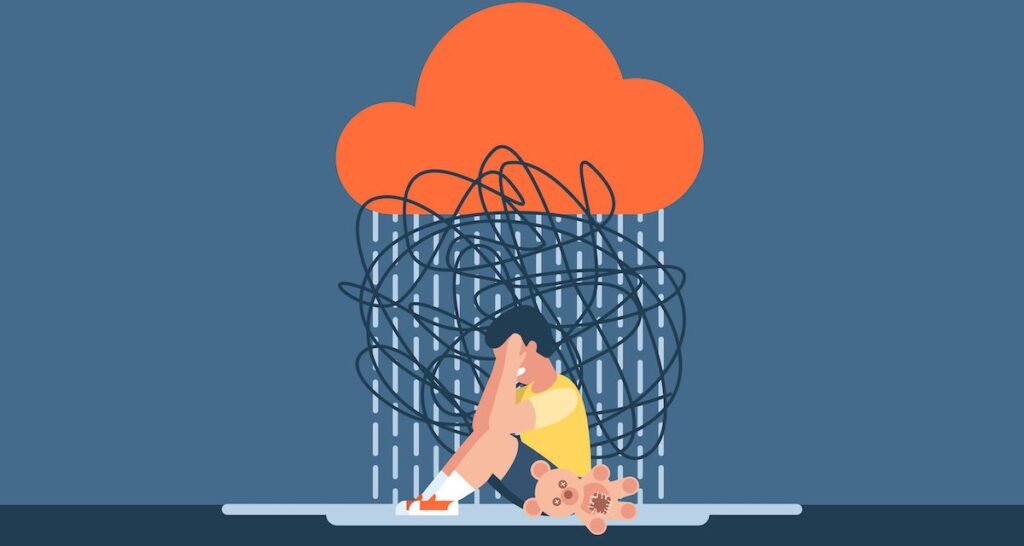
Developmental Trauma Disorder (DTD) describes what happens when those early moments are missing, inconsistent, or frightening — through neglect, abuse, multiple placements, institutional care, or separation from a caregiver. The brain doesn’t stop developing. It develops for a different world: one where nobody is coming, and survival depends on control.
Reactive Attachment Disorder (RAD) is a clinical diagnosis given when that early disruption shows up as a persistent pattern of emotionally withdrawn behaviour and difficulty forming secure attachments. Only a qualified clinician can diagnose it — but plenty of parents recognise their own house in the description long before anyone puts a name to it.
These children did not choose this, and neither did you. Their brains were built somewhere else, before they ever met you.
Why it looks so different outside the house
RAD can be genuinely delightful with teachers, relatives, coaches and
strangers — and unrecognisable the moment the front door closes.
What you live with
- Rage that arrives the moment the door shuts
- Lying about things that needed no lie
- Affection that appears only when something is wanted
- Sabotage of the good days, precisely when they're going well
- Triangulation — turning one adult against another
- The guilt of not liking your own child some days
What the outside world sees
- Charming, affectionate, polite
- Helpful with other adults
- Articulate about their own feelings
- A parent who seems to be overreacting
The distance between those two columns is where the loneliness lives. It’s also why so many parents are told, by people who have never done this, that it must be their parenting.
Why typical parenting advice doesn't work here
Neither one holds for a child with developmental trauma.
1. Consequences assume a child who fears losing your approval. A child who never learned that your approval was reliable has nothing at stake in losing it.
2. Reasoning assumes a brain that can reach logic under stress. In a survival-wired brain, the thinking part goes offline first – exactly when you need it most.
What helps is different in kind, not in degree: understanding what the behavior is actually asking for, responses that lower the temperature instead of raising it, and — before any of that — your own regulation. That last one sounds like the soft option. It’s actually the hardest, and the most important.
Going deeper — what the class covers
The 6-week class, taught with Karen Jolly, LCSW, goes through all
of this properly.
What DTD/RAD looks like at home — and how completely different it can look outside it
Who or what the "Nurturing Enemy" is, and how it shapes family dynamics
Whether medication should be part of the conversation
Navigating holidays
How developmental trauma and RAD develop
Therapies that can help — and approaches that often don't
Common misdiagnoses and co-occurring conditions
Handling birth parent interaction
Questions Parents Ask First
Does this mean my child will never attach?
Is RAD the same as autism, ADHD or oppositional defiant disorder?
No, though the behaviours overlap enough that misdiagnosis is common and co-occurring conditions are frequent. Sorting that out is a job for a clinician who understands developmental trauma specifically. We cover common misdiagnoses in the 6-week class.
Can you diagnose my child?
No. I’m a parent coach, not a licensed therapist, and nothing on this page is a diagnosis or medical advice. If you don’t yet have an assessment, finding a clinician experienced in developmental trauma is worth the effort it takes.
Is this only for adoptive and foster parents?
Not at all. Kinship and biological parents are welcome, and so are grandparents, extended family, pastors, teachers and other caregivers who want to understand this world well enough to be genuinely useful to a family living in it.
If you are in crisis right now. If your child is at risk of harming themselves or anyone else, contact your local emergency services or a crisis line first. Coaching is for the long road, not the emergency.